THE TENSION:
?
After building the storytelling platform, I could see the next opportunity clearly. The shopping experience didn't match the brand experience we'd just created. Someone would land on a beautiful editorial lookbook page and then click through to a product discovery experience that felt like a database. Search was limited. Navigation between KnollTextiles and the parent Knoll furniture brand was confusing. Two related brands with no clear path between them.
The business model still relied heavily on face-to-face sales relationships. eCommerce was generating revenue, but nowhere near what it could, because the website wasn't helping customers move confidently from inspiration to purchase.
THE MOVE:
I saw the gap, built the business case, and convinced the President and Creative Director to allocate $50,000 for a full site redesign. Then I enrolled in General Assembly's UX Design program to build the skills to lead this myself.
Then I put it into practice, leading the end-to-end UX redesign. User interviews, usability tests, prototypes, user flows, nested navigation design, advanced search architecture, and a year-long rollout with engineers and freelancers. I also worked directly with the digital color team to calibrate product imagery, adjusting brightness and saturation by small percentages until the textile on screen perfectly matched the physical swatch.
KnollTextiles & Openbay
Transforming a 75-year archive into immersive digital experiences through Craft CMS, editorial storytelling, and modern content architecture.
Launching a venture-backed startup in new markets through a localized content strategy.


THE EXPERIENCE CHALLENGE:
The advanced search feature was the centerpiece and the most challenging to solve. KnollTextiles had hundreds of SKUs across color families, material types, performance specifications, and designer collections. The existing search returned too many results with too little refinement. Designers needed to filter by color family, substrate, performance rating, and designer origin all at once.
Then the parent/subsidiary navigation between Knoll and KnollTextiles needed a new logic with clear wayfinding between brands and no dead ends.
THE RESULT:
1: Advanced search and nested navigation shipped across the full site.
2: A seamless cross-brand navigation between KnollTextiles and Knoll furniture established for the first time.
I designed a filtering and discovery architecture that made the inventory navigable for the first time. Then I tied it to the storytelling platform so a designer could move from an editorial piece about a collection straight into filtered search results for that collection's products.
The same navigation problem between parent and subsidiary appears at every scale. how do you create a seamless experience between platforms that feel like separate companies but belong to the same ecosystem? I solved it at KnollTextiles between a parent brand and a subsidiary. I solved it again at Wayfair between corporate, careers, and investor relations. The answer is always the same: design the connective tissue first, then build the content that moves through it.
This was the same cross-platform navigation challenge I'd later solve at Wayfair. how do you create a seamless experience between a parent brand and a subsidiary when they live in the same ecosystem but feel like separate companies? At Knoll, that meant designing the navigation architecture to move fluidly between the furniture parent and the textiles division, so a designer researching a full office specification could move between product families without losing the thread.
-
398% increase in upholstery ecommerce revenue year-over-year
-
150% increase in sitewide ecommerce revenue
-
32% increase in web traffic
-
$50,000 investment secured, led, and delivered end-to-end
THE LESSON:
Design the connective layers first (search and navigation), then build the content that moves through it.

Blending Humor and Confidence to Build Trust:
As the voice of the world's first AI-powered auto repair booking app (Openbay), I shaped the B2B and B2C brand positioning, strategy, and messaging. To capture two audiences—drivers and repair shop owners—I created an editorial strategy that was big on personality and ahead of the auto industry trends. Engagement soared with blog page views rising 310% and social traffic to the blog increasing 515% year-over-year.

THE TENSION
?
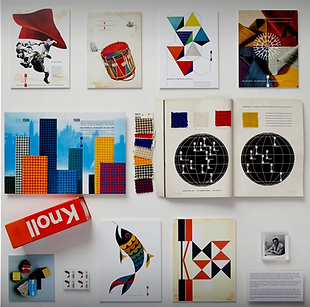
KnollTextiles spent 75 years building one of the most respected names in modern design. The archive was extraordinary. The showroom experience was unforgettable. The digital presence was nowhere near it. A deeply tactile, sensory brand was asking people to make purchasing decisions through a screen, without giving them any way to feel the product.
Visual storytelling was the missing layer.
THE MOVE
I noticed that Knoll, the parent company, was using Craft CMS to power an immersive storytelling platform with dynamic scrolling, embedded video, and editorial-style layouts that looked like a magazine spread.
This was the door to bring textile collections to life that nobody thought to open until I saw the structural gap and made the case for the bigger move.
I shared this idea with the Creative Director and President, who gave me the green light to work with engineering and implement this new content architecture that could hold video, archival photography, founder narratives, collection launches, and brand milestones in a way that moved.
The first major proof of concept was the 75th anniversary campaign. We brought seven decades of archival content to life in a way the brand had never done digitally, which became one of the most immersive brand experiences KnollTextiles had ever published. The platform became the brand's living story for new collection launches and milestone moments.
THE EXPERIENCE CHALLENGE
If a brand can’t be felt physically, digitally, and emotionally, it can’t scale.
The product was tactile by nature. The weight, weave, texture, and color precision needed to be felt through a screen. Every textile told a story that wasn't translated automatically to digital.
Every textile told a story. My job was to build the content architecture, the visual storytelling system, and the brand voice that let someone feel the weight, the weave, and the intention of a fabric they couldn't touch.
THE RESULT
398% eCommerce revenue growth in upholstery.
150% sitewide revenue growth.
32% web traffic increase.
280% Instagram growth.
99% email subscriber growth.
48% keyword growth.
An established digital editorial identity.
Craft CMS became template for future launches.
Made the case for securing a $50K UX budget.
THE LESSON
The gap between a brand's physical truth and its digital presence is almost always where the biggest opportunity lives.
Later on, this work led to an invitation from Wayfair's first Physical Retail team, where I began exploring how an eCommerce-native brand could translate into physical space through electronic shelf tags, endless-aisle displays, and in-store ordering systems.
Designing content systems that connect
BRAND × WORKFLOW × UX × CMS.
To make even the smallest change to aboutwayfair.com and wayfaircareers.com, content owners had to wait at least two weeks in the engineering queue. As a result, the sites presented outdated information to investors, customers, job candidates, press, and partners. Plus, the websites were only available in one language despite Wayfair's growing global influence. The brand reputation was at stake and teams were frustrated by inefficient processes.
Case study 2:
Corporate Rebrand + CMS Migration
If a brand can’t be felt physically, digitally, and emotionally, it can’t scale.


26
teams
75
people
62
pages of copy
23
landing pages
4
languages
1
Project Manager (me)
The Ask:
Wayfair's CEO wanted a streamlined, cohesive, seamless user experience across the About, Careers, and Investor Relations sites. Teams needed a way to publish content code-free and in real time to tell the story of the corporate and employer brands.
My Approach:
The Head of Content invited me to co-lead a new Global Content Operations team to overhaul the company's content management process, starting with the About, Careers, and Investor Relations sites. This wasn't an easy task, but I love a good challenge. As the sole Project Manager, I led 75 people across 26 global teams in: - Piloting a new content management system (CMS) and overseeing the implementation - Migrating and auditing all existing content to the new CMS - Creating approval workflows and content governance models to unify teams and processes - Recreating site maps and redefining the user journey - Designing prototypes and wireframes for 23 new landing pages - Flexing into the role of Product Manager to oversee custom feature engineering requests - Training all teams to own their content from end-to-end for the first time - Copywriting, editing, and signing off on 62 pages of text for news articles, blogs, and landing pages - Translating and localizing into four languages and adhering to accessibility guidelines - Launching new data dashboards to make data-driven content decisions - Presenting to executive leadership (CEO, Co-Founder, CFO, VP of Marketing) The Head of Corporate Communications awarded me with the People Principles award for wrangling so many stakeholders with an "effective collaboration style that was the key to getting so much done in such a tight timeframe."


Impact:
This project set the new standard for designing, localizing, governing, auditing, measuring, and publishing content at Wayfair. Teams like DEI, Sustainability, and Corporate Responsibility now have the training, tools, and processes they need to turn their content aspirations (landing pages, blogs) into a reality. Content owners can make site updates self-sufficiently and on the fly with no need to wait in the engineering queue. Investors, press, and partners are now seeing the most up-to-date company news and job seekers are now experiencing a much stronger, more accurate first impression of what it's like working at Wayfair. Content owners are now using data on a global level like never before. Previously, teams had to jump through hoops to get access to Google Analytics, so I led the charge in making new custom Google Data Studio dashboards accessible in just one click. I took it a step further by creating helpful documentation and monthly metrics check-in meetings to educate and empower content owners with how to assign insights and actions to the data. When we launched the new About Us and Careers sites across the EU, I worked with Legal and Engineering teams to ensure GDPR compliance to expand our analytics capabilities into Ireland, Germany, and the UK. Data is now at the forefront, setting our content up to outperform in all major markets. Learnings: Stakes were high with the C-suite executives taking a front row seat and weighing in on content and design decisions. Getting feedback as early and as often as possible was key to getting so much done in a shockingly quick turnaround time (8 months). Having a solid content governance model that was easy to understand and readily accessible to everyone in the project created accountability and kept everything on track. My Slack updates kept everyone engaged and excited as we reached the finish line. It was an exercise of herding cats, with 75 people across 26 teams in the EU and US all working remotely throughout the implementation and launch phases. I’m beyond proud of what we achieved together and the lasting legacy it leaves on Wayfair’s content ecosystem.

Case study 3:
Evidence-Driven
Experience Design
Wayfair's Talent team found that employees who switch to a new internal team have a Net Promoter Score (NPS) 28% higher than those who remain on the same team. This insight led to an initiative focused on promoting internal mobility to improve employee retention and satisfaction. As the lead UX Content Designer, my goal was to simplify and alleviate the stress of transitioning to a new team at Wayfair. I accomplished this by designing a world-class careers site that sparked confidence and joy. The result was so impactful that even Wayfair’s CEO praised it as a "seamless job search experience for employees seeking a new internal role."
Informed by Research, Tested for Impact:
With just one month to design and test a new job board, we didn't cut any corners. UX resources were as tight as the expected turnaround time, so I stayed nimble and assumed the additional role of UX Researcher. From there, I quickly got to work gathering as many quantitative and qualitative insights as possible in the form of:
-
Whiteboard workshops to dream big and uncover key themes
-
User interviews and employee surveys to inform feature prioritization
-
Competitor research to identify exceptional examples of job search experiences
-
Card sorting exercises to align information architecture with mental models
-
User flows and journey mapping to address gaps in the recruiting and hiring process
-
Red-light green-light rapid prototyping exercises to weigh design must-haves against technical feasibility
-
Contextual inquiry and usability tests to set our finalized designs up for success


Designing Content with Empathy and Insight:
Our investment in thorough user research revealed that fear of the unknown was the biggest barrier to participating in internal career moves. By pulling key themes from our research synthesis, I went to work with creating personalized and inspirational content to address these fears of the unknown head-on, including:
- "Did you know" facts and success stories highlighting the impact of internal mobility
- Custom email alerts for jobs in your chosen location and team
- Coffee chat sign-up form to network with new teams
- Infographics with timelines and next steps clearly defined
- FAQs and 101 articles (general and team-specific)
- Context-setting icons to add visual interest
- A personalized, conversational greeting upon logging into the portal
Blending Humor and Confidence to Build Trust:
As the voice of the world's first AI-powered auto repair booking app (Openbay), I shaped the B2B and B2C brand positioning, strategy, and messaging. To capture two audiences—drivers and repair shop owners—I created an editorial strategy that was big on personality and ahead of the auto industry trends. Engagement soared with blog page views rising 310% and social traffic to the blog increasing 515% year-over-year.

1
month to
design and
test
17k
target users (Wayfair employees)
10k
users within one month of launching
From the Screen to Behind-the-Scenes:
As an architect of information, I focus on the big picture. A product is only as seamless as the operations behind it, which is why I designed new process flows alongside user flows. Staying true to my north star vision of removing stress and uncertainty from internal mobility, I partnered with recruiters and hiring managers to identify back-end pain points. Together, we strategized and implemented process flow improvements. To promote consistency and clarity across teams, I delivered concise guidance through infographics, FAQs, and 101 articles, as well as segmented product launch announcements tailored to each team’s specific goals.


There's a Reason Product Adoption Was So High:
Through earning trust from my product and engineering partners, I was put in charge of the CareerHub product marketing strategy for our audience of 17,000+ global employees. Within one month of launching, we saw 10,000+ users engaging with the site. The Talent team was so blown away by my rollout plan for this launch that they put me in charge of all Talent product marketing going forward.

Case study 4:
Physical-to-Digital Retail Evolution
Leading the Omnichannel Charge:
At KnollTextiles, the business model relied heavily on face-to-face direct sales. Recognizing the need to bridge the gap between online and offline experiences, I advocated for a $50,000 investment to overhaul the website end-to-end. As the leader of this large-scale UX design project from concept to completion, I conducted user interviews and usability tests, created prototypes and user flows, pitched to directors, and engaged with freelancers, product managers, and engineers to to bring the designs to fruition. Over the course of one year, we rolled out incremental updates, resulting in a 150% increase in eCommerce revenue across all product categories, with upholstery revenue soaring 398%.
This highly successful endeavor inspired me to be a part of revolutionizing the future of eCommerce at Wayfair as the first UX Writer for the company's first-ever brick-and-mortar retail store. Through strategizing educational and experiential elements such as endless aisle touchscreen displays and electronic shelf tags, I uncovered a niche in omnichannel evolution.


